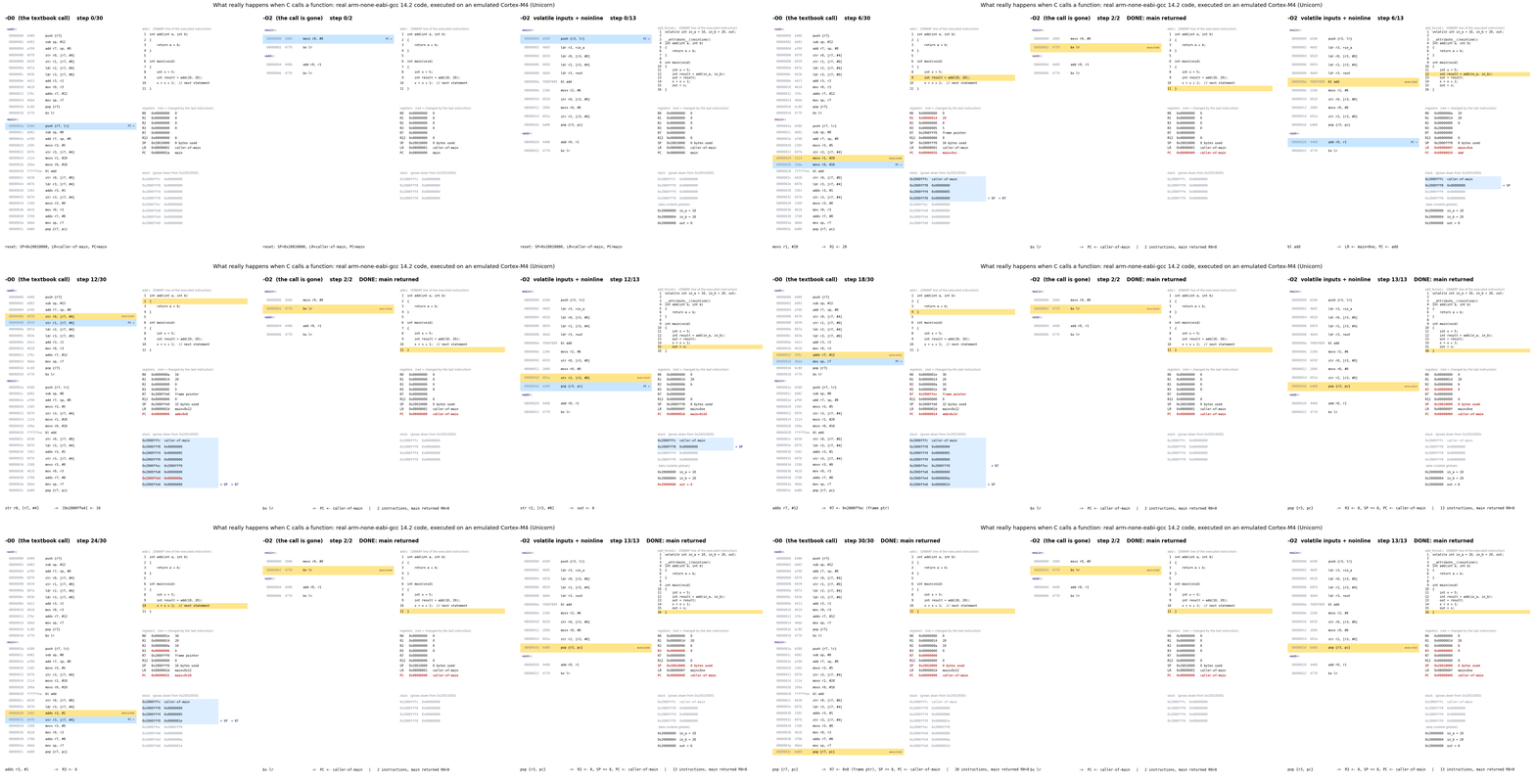
1 -O0: the textbook call
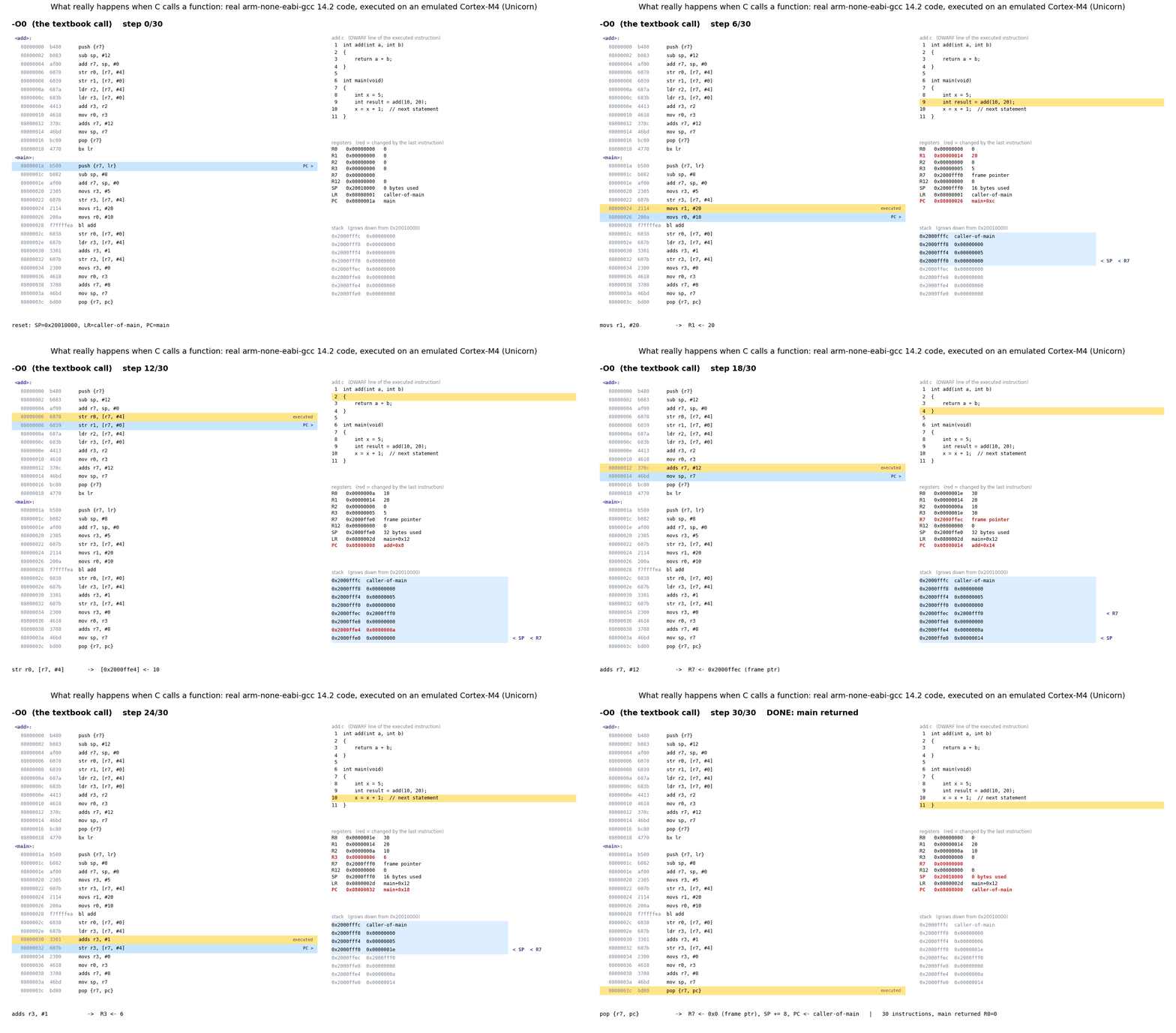
This is what the original infographic describes. Args in R0/R1, BL add, result in R0, return with BX LR. Plus a lot of stack traffic nobody asked for.
arm-none-eabi-gcc -mcpu=cortex-m4 -mthumb -O0 -c add.c
<add>:
  push  {r7}
  sub   sp, #12
  add   r7, sp, #0
  str   r0, [r7, #4]      ; spill a
  str   r1, [r7, #0]      ; spill b
  ldr   r2, [r7, #4]      ; reload a
  ldr   r3, [r7, #0]      ; reload b
  add   r3, r2
  mov   r0, r3            ; return value
  adds  r7, #12
  mov   sp, r7
  pop   {r7}
  bx    lr
<main>:
  push  {r7, lr}
  sub   sp, #8
  add   r7, sp, #0
  movs  r3, #5
  str   r3, [r7, #4]      ; x = 5
  movs  r1, #20           ; b
  movs  r0, #10           ; a
  bl    add
  str   r0, [r7, #0]      ; result = R0
  ldr   r3, [r7, #4]
  adds  r3, #1
  str   r3, [r7, #4]      ; x = x + 1
  movs  r3, #0
  mov   r0, r3
  adds  r7, #8
  mov   sp, r7
  pop   {r7, pc}
30instructions executed
1BL + 1 BX LR
8stack loads/stores
- Leaf function add never saves LR; only non-leaf main pushes it.
- Every variable lives on the stack, so a and b are stored and immediately reloaded.
2 -O2: the call is gone
add(10, 20) has constant arguments, so the compiler computes 30 at build time. result and x are never read, so they are deleted. What remains of main is "return 0".
arm-none-eabi-gcc -mcpu=cortex-m4 -mthumb -O2 -c add.c
<add>:
  add   r0, r1            ; a + b, straight into R0
  bx    lr

<main>:
  movs  r0, #0            ; return 0
  bx    lr


; No BL. No LR write. No stack.
; No 10, no 20, no 30.
; add() is still emitted only because
; it has external linkage and something
; else might call it.

; -O1 gives the identical result.
2executed (4 emitted)
0BL executed
0stack accesses
- Constant folding + dead-store elimination + inlining make the "6 steps" disappear.
- This is why breakpoints on add never hit in a release build, and why result shows "optimized out" in the debugger.
- The poster is not wrong. It is a picture of -O0, and production firmware is almost never built at -O0.
3 -O2 when the call is forced
Make the inputs volatile (unknown at build time), mark add noinline, and store the outputs. Now a real call survives optimization. This is what production code looks like.
arm-none-eabi-gcc -mcpu=cortex-m4 -mthumb -O2 -c add_forced.c
<add>:
  add   r0, r1
  bx    lr

<main>:
  push  {r3, lr}          ; r3 only pads SP to 8 bytes
  ldr   r3, =in_a
  ldr   r0, [r3, #0]      ; a = in_a
  ldr   r1, [r3, #4]      ; b = in_b
  ldr   r3, =out          ; kept live ACROSS the call (!)
  bl    add
  movs  r2, #6            ; x = x + 1 already folded
  str   r0, [r3, #0]      ; out = result
  movs  r0, #0            ; return 0 (before 2nd store)
  str   r2, [r3, #0]      ; out = x
  pop   {r3, pc}          ; return via epilogue, not BX LR
13instructions executed
1BL executed
2stack accesses
- push {r3, lr}: r3 is not being preserved, it is filler so SP stays 8-byte aligned at the call (AAPCS rule).
- The instruction after BL is movs r2, #6, which belongs to the C line after result = .... Execution resumes at an instruction, not at a C statement.
- r3 is scratch per AAPCS, yet GCC loads it before BL and uses it after. Not a bug: -fipa-ra (on at -O2) saw that add only writes R0, so it kept r3 live. Build with -fno-ipa-ra, or move add to another .c file, and the load moves after the call. The ABI is a contract for code the compiler cannot see.
- pop {r3, pc} loads PC straight from the stack. That single instruction is the ROP attack surface on ARMv7-M.